
Learn Material — Block: Inventory Performance
Monitor stock, costs, and planning trends — and prevent inventory risks before they affect revenue.
1. What Is This Block?
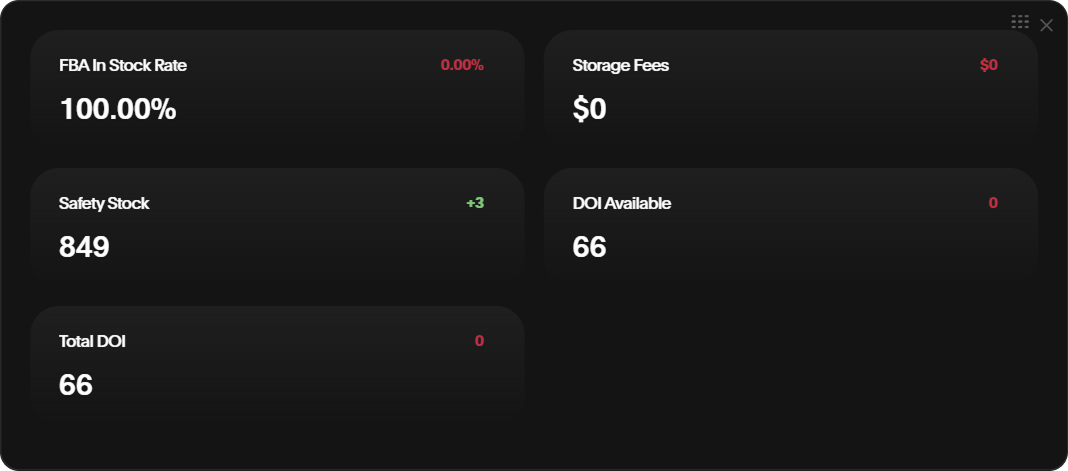
Inventory Performance is a visual overview of your stock position over time, across all key metrics:
Stock Rates
- FBA
- FBT
- 3PL
Financial Metrics
- Storage Fees
- Shipping Fees
Planning Metrics
- Forecasting Accuracy
- Inventory Turnover
- Safety Stock
- DOI Available (Today)
It shows not just how much inventory you have, but where it is, when it will be available, and the operational and financial impact.
2. Why This Block Matters
Inventory issues are rarely caused by a single number. Without this block, you can see stock levels, but you can’t:
- Predict upcoming stockouts or overstock
- Identify spikes in commissions, storage, or shipping fees
- Understand whether safety stock and turnover rates actually protect your business
Inventory Performance makes trends and spikes immediately readable, so you can act before issues escalate.
3. What You Unlock With This Block
Using Inventory Performance, you can:
- Spot upcoming stockouts or overstock situations
- Understand how delays, shipments, and forecast errors affect availability
- Track storage, shipping, and other operational costs
- Compare inventory behavior across time (daily, weekly, monthly)
- Connect operational trends to financial impact
4. How It Works (Conceptually)
The chart aggregates all metrics across inventory states and visualizes them over time. You can:
- Switch between daily, weekly, and monthly views
- Filter by ASIN or by metric
- Identify anomalies in FBA, FBT, or 3PL stock rates
- Evaluate safety stock versus actual demand
It works in synergy with:
- COO Executive Summary — operational health at a glance
- Timeline View — operational flow over time
- Summary View — per-ASIN breakdown
5. Interaction With WHAT IF Scenarios
Inventory Performance updates dynamically based on WHAT IF scenarios. You can:
- Simulate demand changes
- Test different replenishment or shipment timings
- Evaluate financial impact of storage and shipping changes
- Forecast inventory risks before they affect revenue
6. Common Misconceptions
- “Available stock alone shows inventory health”
- “Safety stock guarantees protection”
- “Delays don’t matter if totals are high”
In reality, timing, trends, and financial impact matter more than totals. Spikes or drops in stock rates, fees, or turnover are early warnings.
7. What To Do Next
After reviewing Inventory Performance:
- Check Supply Chain Insights for root causes
- Use WHAT IF scenarios to plan replenishment
- Adjust orders and inventory levels based on projected gaps
This block helps you act before inventory problems impact revenue or costs.
What to Read Next
To go deeper, continue with:


